
Kubota Wheel Rakes vs Rotary Rakes
Kubota offers both wheel rakes and rotary rakes so you can match the rake to your acres, crop type, and finish quality. Below is a simple breakdown of how each rake design works, along with the key features and benefits of both styles.
What Is a Kubota Wheel Rake?
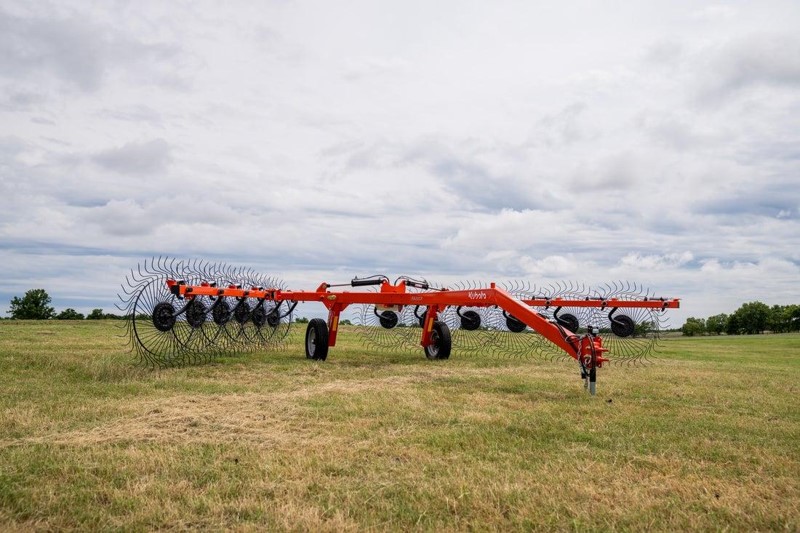
Kubota wheel rakes use a series of ground-driven wheels with tines around the rim to lift and move hay into a windrow. As the rake is pulled forward, the wheels turn and gently sweep the crop into a consistent row. This design is simple, fast, and efficient for large acres.
Key Features of Kubota Wheel Rakes
- Ground-driven rake wheels – no PTO required in most configurations.
- Simple mechanical design with fewer hydraulic and drive components.
- Wide raking widths available for covering more acres per hour.
- Easy transport folding for moving between fields.
- Adjustable raking width and windrow width on most models.
Benefits of Kubota Wheel Rakes
- High productivity: Great for large, open fields where speed matters.
- Lower operating cost: Minimal PTO power requirement and simple maintenance.
- Budget-friendly: Typically a lower upfront investment compared to rotary rakes.
- Easy to run: Simple controls and quick learning curve for new operators.
- Versatile: Works well on dry grass hay and many mixed forages.
What Is a Kubota Rotary Rake?
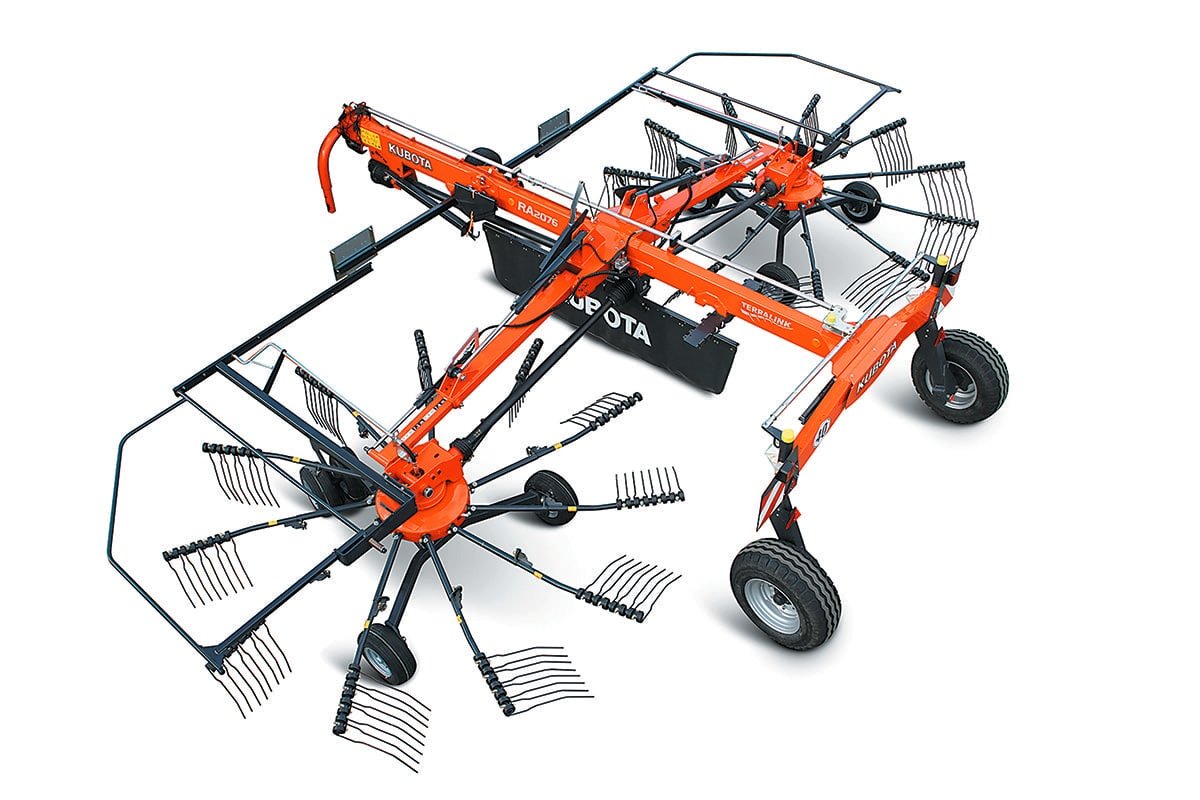
Kubota rotary rakes use PTO-driven rotors with multiple tine arms that gently lift the crop and place it in a fluffy, well-shaped windrow. The tine angle and rotor design minimize leaf loss and dirt contamination, which is especially important for high-quality hay and silage.
Key Features of Kubota Rotary Rakes
- PTO-driven rotor(s) with multiple tine arms for clean, controlled raking.
- Excellent ground contour following for uneven fields.
- Adjustable rotor height and tine angle to match crop and conditions.
- Clean, well-formed windrows that feed balers and choppers efficiently.
- Options for single-rotor, twin-rotor, and center-delivery configurations.
Benefits of Kubota Rotary Rakes
- Gentle on crop: Preserves leaves on alfalfa and premium forages.
- Cleaner hay: Less dirt and ash content thanks to controlled tine height.
- Consistent windrows: Smooth, even rows that improve baler performance and bale density.
- Better drying: Fluffy windrows promote air flow for faster curing.
- Professional finish: Ideal for dairies and commercial hay producers targeting top quality.
Wheel Rake vs Rotary Rake – Which Is Right for You?
Both Kubota wheel rakes and rotary rakes are proven tools. The best choice depends on your acres, crop, tractor size, and the hay quality you’re targeting.
| Feature | Kubota Wheel Rake | Kubota Rotary Rake |
|---|---|---|
| Typical Use | High-acreage hay, grass, and mixed forages. | Premium alfalfa, silage crops, and high-value forage. |
| Crop Handling | More aggressive, good for dry crop; may cause more leaf loss in delicate crops. | Very gentle on leaves; excellent for maintaining feed value. |
| Windrow Shape | Dense, traditional windrows; good for dry hay baling. | Fluffy, even windrows; ideal for fast drying and smooth feeding into balers. |
| Ground Following | Good in smoother fields; more sensitive to rough ground. | Excellent contour following on uneven terrain. |
| Tractor Requirements | Lower HP requirement, often no PTO needed. | Requires PTO and appropriate HP, depending on size. |
| Investment Level | Generally lower purchase cost. | Higher initial investment, offset by forage quality gains. |
Not Sure Which Kubota Rake Fits Your Operation?
Whether you’re raking grass hay for beef cattle or high-quality alfalfa for dairy, our team can help you compare Kubota wheel rakes and rotary rakes based on your acres, tractor size, and forage goals.
Call us at 316-799-2141 or email Email Sales to talk rakes and hay tools.